


How to Organise a Bathroom Counter in India: A Practical Guide
The bathroom counter is one of the most-seen and least-considered surfaces in an Indian home. It is the first thing you look at every morning and the last thing you see before bed, and in most homes it is also the surface that accumulates the most visual chaos without anyone deciding to let that happen. A toothbrush here, a half-used bottle there, cotton pads spilling out of their packet, a hairbrush wedged against the mirror - none of it arrived deliberately, and all of it adds up over weeks until the counter simply looks like clutter rather than like a collection of products you actually use every day.
This guide covers exactly how to organise an Indian bathroom counter properly, the specific challenges Indian bathrooms present that international organisation advice rarely accounts for, what actually solves the problem rather than just rearranging it, and how to keep the system working months after the initial tidy-up rather than watching it slide back into chaos.
Why Indian Bathroom Counters Get Cluttered
Indian skincare and grooming routines, especially in households with more than one person sharing a bathroom, involve a genuinely high product count. Face wash, moisturiser, sunscreen, multiple hair products, cotton pads, ear buds, a toothbrush holder, toothpaste, and often more - all of this needs a home, and a standard bathroom counter with no organisation system simply accumulates it in whatever order it was last used. Multiply this by two or three people sharing the same bathroom, each with their own product routine, and the counter quickly becomes a shared space with no individual structure at all.
The second factor is humidity. Indian bathrooms, particularly in coastal cities and during monsoon months, run consistently more humid than bathrooms in drier climates. Standard cardboard or low-quality plastic organisers degrade quickly in these conditions - warping, staining, or simply looking tired within months. A storage solution that works in a temperate, dry climate is frequently the wrong choice for an Indian bathroom, even if the design itself is perfectly reasonable.
The third factor, less obvious but genuinely significant, is that most generic organisers sold in India are designed around Western product shapes and counter habits, not Indian ones. A single shallow tray with no compartmentation, designed for a context where most people own three or four bathroom products, does not translate well to an Indian routine that might involve eight, ten, or more daily items across hair, skin, and grooming categories.
Start With What Stays and What Goes
Before buying any organiser, sort your bathroom products into two categories: things used every single day, and things used occasionally. Daily-use items earn counter space. Occasional items go in a cabinet or drawer. This single step solves more counter clutter than any storage product can on its own - most cluttered counters are cluttered because everything is treated as a daily item, regardless of how often it is actually used.
Be honest during this sort. The expensive serum you use twice a month does not need to live on the counter, however nice the bottle looks. The hair mask you apply once a week belongs in a cabinet, not in daily view. The goal of this step is to reduce the total number of objects competing for counter space before you even think about organisers, because no amount of clever compartmentation can make twenty daily items look tidy on a counter designed for eight.
A useful secondary sort, once you have separated daily from occasional: within the daily category, separate "needs to be visible and instantly reachable" from "needs to be stored but does not need to be seen." A toothbrush and toothpaste need instant, unthinking access every morning. A spare bar of soap, while used daily eventually, does not need to sit in open view - it can live inside a compartment with a lid or in the organiser's less visible section.
Why Compartment Design Matters
A single open tray with no dividers looks tidy for about a day before everything shifts back into a pile. The right organiser has multiple compartments sized for different product types - taller slots for bottles, shallow sections for smaller items like cotton pads and ear buds, and walls high enough that items do not migrate between sections every time someone reaches for something.
This compartmentation does something psychologically useful as well as practically useful: when every object has a designated spot, putting things back becomes a near-automatic action rather than a decision. Without designated spots, every act of tidying requires a small decision about where each item should go, and decision fatigue is exactly why bathroom counters drift back into chaos within a week of a thorough clean-up.
The Luxe Bathroom Organiser at RCasa is built around exactly this requirement. It is available in Green, Blue, and Gold, with water-resistant construction designed specifically for Indian bathroom humidity, and a multi-compartment layout that holds the actual range of products that live on an Indian vanity counter - not a generic single-tray layout borrowed from a different market's bathroom habits. The compartment heights vary deliberately across the organiser, accounting for the fact that a serum bottle, a tube of toothpaste, and a packet of cotton pads are simply not the same shape and should not be expected to share the same storage logic.
Choosing a Colour That Works With Your Bathroom
Gold-toned organisers pair naturally with warmer bathroom fixtures - brass taps, warm-toned tiles, wood accents. Blue and green work better against cooler fixture tones and white or grey tile palettes. If you are not sure, look at your tap finish first. It is the fixture element most people notice without realising it, and matching the organiser's tone to it makes the whole counter read as coordinated rather than assembled piece by piece.
A second consideration, beyond the fixtures: think about the time of day you are most often in the bathroom and under what lighting. Warm-toned bathroom lighting (common in many Indian homes, particularly those with yellow-toned overhead bulbs rather than cooler white LEDs) flatters gold tones more than it flatters cool blue or silver tones, which can look slightly washed out under warm light. Conversely, a bathroom lit with cooler white lighting will let blue and green tones read with more clarity and crispness.
If your bathroom is shared and serves more than one person with genuinely different aesthetic preferences, a neutral gold tends to be the safer universal choice, since it pairs reasonably well across a wider range of existing fixture finishes than either blue or green does.
Where to Place the Organiser
Position the organiser toward one side of the counter rather than centring it. This leaves space on the other side for the items that are too tall or too irregularly shaped for compartment storage - a hand wash pump, a taller bottle, a small plant if there is room. A counter with one organised zone and one open zone reads as more deliberate than a counter entirely filled edge to edge.
If your bathroom has more than one person sharing the counter, consider whether a single large organiser or two smaller, separately-owned organisers makes more sense for your household. In shared bathrooms with genuinely distinct routines - different skincare products, different hair products, possibly different daily schedules that mean one person's items need to be accessible at a different time than the other's - splitting into two zones, each with their own smaller organiser, can reduce daily friction far more than a single shared system that requires negotiation over compartment space.
Add a Tissue Box Cover
The cardboard tissue box is one of the few objects in a bathroom that almost everyone owns and almost no one styles. A tissue box cover slides over the existing cardboard box and instantly removes the one object on the counter that contributes nothing visually. It is a small addition that completes the surface in a way that is disproportionate to its cost and effort, and it is also one of the easiest single changes you can make if you are short on time but want one quick visual improvement to the space.
Maintaining the System
An organiser only stays organised if returning items to their compartment becomes the default habit rather than an occasional tidy-up. Place the organiser somewhere genuinely convenient - close enough to where products are actually used that putting them back takes no extra effort. An organiser placed somewhere slightly inconvenient gets bypassed within a week, and the counter drifts back toward its previous state.
Wipe the organiser weekly with a damp cloth. The water-resistant construction of the Luxe Bathroom Organiser means this does not damage the finish, and a quick wipe keeps the compartments free of the dust and product residue that accumulates on any surface in regular bathroom use. Pay particular attention to compartments holding liquid products, since these are the most likely to accumulate sticky residue from drips and overflow over time.
If you notice the same item consistently ending up outside its designated compartment, that is useful information rather than a failure of the system - it usually means the item has been assigned to a compartment that does not match how it is actually used. Reassign it to a more logical spot rather than repeatedly correcting the same drift.
Beyond the Counter - A Complete Bathroom System
A fully organised bathroom rarely stops at the counter. Once the counter itself is under control, consider what else in the bathroom contributes to the overall sense of order. A small tray near the shower for shower products, kept separate from the main counter organiser, prevents wet bottles from being placed directly on the vanity surface where they leave water rings. A designated spot - even a simple small basket or container - for items that are mid-use but not part of the daily core routine (a face mask currently being used twice a week, a new product still being trialled) gives those items a temporary home that is neither the main organiser nor a cluttered loose pile.
FAQ
How do I organise a small bathroom counter in India?
Sort products into daily-use and occasional-use first. Keep only daily items on the counter. Use a multi-compartment organiser sized appropriately for the counter, positioned to one side rather than centred, with the remaining space left open for taller items.
What is the best bathroom organiser for Indian humidity?
A water-resistant organiser specifically built for humid conditions. The Luxe Bathroom Organiser from RCasa is constructed for this - available in Green, Blue, and Gold.
How do I choose the colour of a bathroom organiser?
Match it to your tap and fixture finish. Gold organisers suit warmer fixture tones. Blue and green suit cooler tones and white or grey tile palettes. Consider your bathroom lighting too - warm lighting flatters gold, cooler lighting flatters blue and green.
What should I do if my bathroom counter keeps getting cluttered again after I organise it?
Check whether the organiser is placed somewhere genuinely convenient, and check whether any single item is consistently ending up outside its compartment - that usually means it has been assigned an illogical spot rather than that the system itself has failed.
Should a shared bathroom use one organiser or two?
If the people sharing the bathroom have distinct routines and product sets, two smaller organisers - one per person - often work better than one shared system that requires negotiating compartment space.
Where can I buy a bathroom organiser in India?
RCasa. Free shipping on orders above Rs 999.
Related Posts
-
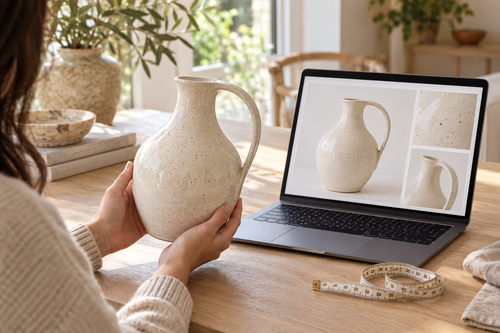
What Actually Makes a Home Decor Photo Trustworthy When You Buy Online
You can judge a lot about an online decor product from its photos, if you know what to look for. Trustworthy listings...
-
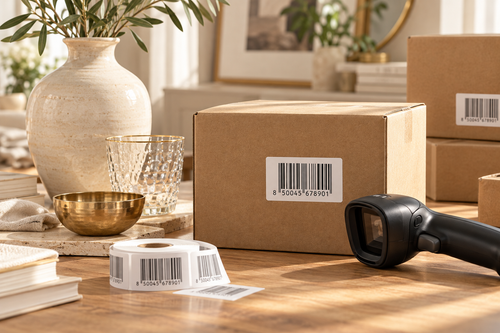
GTIN, GS1 and Barcodes: A Plain Guide for Home Decor Sellers
If you sell home decor online, a missing GTIN quietly weakens your listings. It will not stop most products from appe...
-
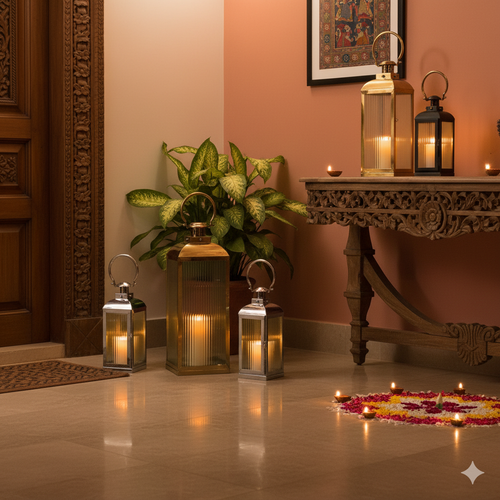
From Festival Glow to Everyday Calm: The Indian Lantern, Reimagined in Steel
There's a reason a lantern never feels out of place in an Indian home. Long before fairy lights and dimmers, a single...
-
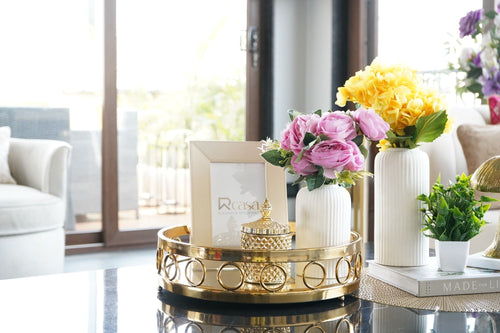
The Allure of Glass Trays: Elevating Every Corner of Your Home
When it comes to home decor, it's often the small touches that truly make a space your own. At RCasa, we believe in t...
