


The Nightstand Test: Where a Jewellery Organiser Box Actually Earns Its Place
Most jewellery ends up in a tangled bowl or a drawer because the organiser lives in the wrong place. The single best predictor of whether a jewellery organiser box gets used is not its compartments or lining. It is whether it sits where you already take your jewellery off. Get the location right and even a modest box works. Get it wrong and the fanciest box collects dust.
Start with the take-off point
Watch yourself for a few days. Where do your earrings, rings, and watch actually land when you remove them? For most people it is the nightstand, the edge of the bathroom sink, or a corner of the dressing table. That spot is your take-off point, and that is exactly where the organiser needs to be. If the box lives in a cupboard across the room, you will keep dropping pieces wherever your hands stop first.
This sounds obvious, yet people choose a box for looks and then place it somewhere convenient for the shelf, not for the habit. The box loses the fight with human laziness every time.
The nightstand test
Before you buy, measure your take-off surface. A nightstand often has less usable space than you think once a lamp and a phone are on it. Ask three questions:
- Footprint: will the closed box sit flat without crowding the lamp or blocking the drawer?
- Opening clearance: can the lid open fully without hitting the wall or the lamp shade?
- Reach: can you drop an earring in one-handed, half-asleep, without lifting a tray?
If a box fails the reach test, it will not get used at night, which is when most jewellery comes off. A box that requires two hands and full attention is a box for weekends only.
Match compartments to what you remove daily
Your daily pieces and your special pieces have different needs. The organiser at your take-off point should be built around the daily rotation: the earrings you wear most, one or two rings, a watch, an everyday chain. Deep velvet-lined slots for statement pieces are lovely, but if they dominate the box, your daily studs get lost. A good nightstand box has a few quick-drop sections near the front and protected sections behind.
Two zones beat one perfect box
Here is a habit that works better than hunting for one flawless organiser. Keep a small quick-drop box at the take-off point and a larger organiser in your dressing area for the pieces you wear rarely. The small one catches everything the moment it comes off. Once a week you move the special items into deeper storage. This two-zone system means nothing gets left on a random surface, and your good pieces still get proper protection.
What to look for once location is sorted
Only after you know where the box will live should you weigh features. Then a soft lining matters, because it protects against scratches. Then compartment depth matters, so rings do not slip under dividers. Then a lid matters, because dust and tarnish are real. A box you can reach is a box you will actually use.
The mistake to avoid
Do not buy the biggest box you can find and hope to grow into it. An oversized organiser pushes itself off the nightstand and into a cupboard within a month. Buy for the surface and the habit you have now, not the collection you imagine.
Pieces sized for a bedside table
Measure first, then compare. Our Glass Jewellery and Multipurpose Organiser in cream measures 10 x 7 x 4.5 inches, with a plush lined interior divided for jewellery, watches and rings and a lid that keeps dust out, so it suits a nightstand with room for a lamp. It also comes in pink. For the quick-drop zone, an open piece works better than a lidded one: the Hexagon 3 Part Organiser is 7 x 7 inches with a suede interior and three open sections you can drop a ring or earrings into one-handed.
See more options in our jewellery box collection, and if fine chains are part of your daily rotation, read the grid vs the nest before you choose a layout.
Frequently asked questions
Where should a jewellery organiser box go? At your take-off point, meaning wherever you naturally remove jewellery, usually the nightstand or dressing table. Location beats every other feature for daily use.
How big should the box be? Big enough for your daily rotation and small enough to sit flat on your chosen surface with the lid opening freely. Measure the surface first.
Should I keep all my jewellery in one box? A two-zone approach often works better. A small quick-drop box at your take-off point and a larger organiser for rarely worn pieces keeps everything off random surfaces.
Does the lining really matter? Yes, once location is sorted. A soft lining reduces scratches, and a lid limits dust and slows tarnish.
Why do I keep leaving jewellery outside the box? Almost always because the box is not where you take pieces off. Move it to your take-off point and the habit usually fixes itself.
Related Posts
-
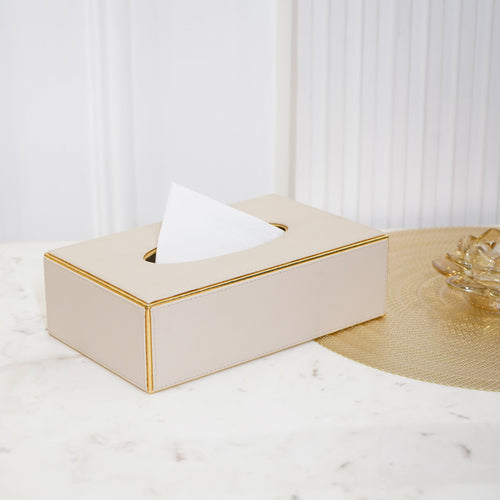
The Leather Tissue Box Cover That Does Not Warp: What to Check Before You Buy
A leather tissue box cover should slide over a standard box, sit steady when you pull a tissue and keep its shape for...
-
Buy Luxury Home Decor Online in India: A Complete Guide
This blog provides comprehensive knowledge on transforming your living space into a luxury haven with online luxury h...
-
5 Ways towards a Mood-Boosting Home with RCasa
Are you having the blues? It might be due to the colors of your room. Research on color theory says the hues we choos...
-
5 Decor Items to Bring Good Luck and Positivity
Do you ever feel like you could use a little bit of an extra luck in your life? Maybe you've even considered carrying...
