


How to Style a Coffee Table for an Indian Living Room
A coffee table that is empty looks unfinished. A coffee table that is crowded looks cluttered. Somewhere between those two states is a styled coffee table - composed, deliberate, and genuinely pleasant to look at from the sofa. Getting there is less about taste and more about a small number of practical rules that most people have never been told, because most home decor advice is written for furniture catalogues rather than for the living room you actually sit in every evening.
This guide walks through exactly how to style a coffee table for an Indian living room - what objects to choose, how many, at what heights, how the table relates to the rest of the room, and how to use a tray to hold the whole thing together. It also covers the specific mistakes that make an otherwise good arrangement look wrong, and how to adjust the whole approach depending on the size and shape of your particular table.
Why Coffee Tables Look Unfinished
The most common reason a coffee table looks wrong is not the objects on it. It is the absence of a boundary. Without something to define where the arrangement begins and ends, objects on a table read as scattered rather than placed - even when they are individually beautiful. A candle here, a book there, a small dish somewhere else: each piece might be lovely on its own, but without a unifying frame, the table reads as a surface that things have landed on rather than a surface that has been considered.
The second most common reason is height. A table where every object sits at the same level reads as flat and uninteresting from a seated position, which is the only position most people actually view a coffee table from. You are not looking down at your coffee table from above most of the time. You are looking at it from the sofa, at a low angle, which means height variation matters far more for a coffee table than it does for, say, a high shelf you view from below.
The third reason is number. Even numbers of objects - two, four - tend to read as symmetrical pairs rather than as a composed group. This sounds like a small detail. In practice, it changes how a table reads completely. Two candle holders side by side look like a matched set waiting for something else to join them. Three objects, even in a loosely irregular arrangement, read as a complete thought.
The fourth reason, less discussed but just as real, is proportion relative to the room. A small, delicate arrangement on a large coffee table in a spacious living room looks lost - the table dwarfs the styling and the eye does not land anywhere with confidence. A large, dramatic arrangement on a small coffee table in a compact apartment living room looks like it is fighting for space it does not have. The scale of your styling needs to match the scale of both the table and the room around it, not just the table in isolation.
The Rule of Three Heights
Every coffee table arrangement should have three distinct heights. This is the single most useful rule in this entire guide, and if you take away nothing else, take this.
Tall - a candle holder, a table lamp if the table is positioned for one, or a tall vase. This is the anchor - the piece that gives the arrangement its vertical presence and is usually the first thing the eye registers when entering the room. Without a tall element, an arrangement reads as a flat collection of small objects rather than a composition with depth.
Medium - a figurine or a smaller decorative object. This sits at eye level when seated and is usually the piece that draws the most direct, sustained attention. It is the object you will actually look at while talking to someone on the sofa, which means it should be interesting enough to hold attention without being so busy that it becomes distracting during conversation.
Low - a stack of coasters, a small tealight holder, or a low decorative bowl. This grounds the arrangement and keeps the eye from only travelling upward. The low element is also frequently the most functional piece in the arrangement - the coaster stack you will actually use, the small bowl that holds a remote or a set of keys without looking like storage.
Three heights, three objects, one tray. This is the simplest version of a coffee table arrangement that genuinely works, and it is the version most people should start with before attempting anything more elaborate. Once this base formula feels intuitive, you can scale up to five or six objects across the same three height bands without losing the structure that makes it work.
Why You Need a Tray
A decor tray is the single most useful object for coffee table styling, and it is the one most people skip. Without a tray, your three objects sit directly on the table surface and read as separate things that happen to be near each other. With a tray, the same three objects read as one composed group with a clear edge - the difference between "things on a table" and "an arrangement."
The tray does something else too - it protects the table surface from candle wax, water rings, and daily wear, which means the arrangement can include functional pieces (a candle you actually light, a small dish you actually use) without worrying about the table beneath it. This is not a minor practical benefit. It is the reason a styled table can survive actual daily life rather than needing to be treated as untouchable.
A tray also creates psychological permission for the rest of the table to stay clear. Once there is a defined "decor zone" bounded by a tray, the remaining table surface reads as deliberately left open for function - drinks, a laptop, a book - rather than as an area that simply has not been filled with objects yet. This single distinction is what separates a coffee table that looks intentional from one that looks like an ongoing decorating project.
Choose a tray sized to hold your three objects with a small amount of breathing room on each side - not so large that the objects look lost, not so small that they overhang the edge. As a rough proportion, the objects should occupy roughly two-thirds of the tray's surface area, leaving the remaining third as visual breathing room around the edges.
Keep the Material Palette Consistent
This is the detail that separates an arrangement that looks intentional from one that looks accumulated. A gold candle holder, a silver-finish figurine, and a copper-toned tray on the same table compete with each other. They each ask the eye to register a different metal tone, and the result is visual noise rather than visual interest - even though, individually, each piece might be a genuinely well-made object.
Pick one material family and stay within it. If your tray is gold, your candle holder should be gold-toned or gold-accented. If your figurine has silver detailing, look for a tealight holder in the same finish. The RCasa range is built with this in mind - pieces from the figurines, candle holders, vases, and trays subcategories share consistent material registers specifically so they can be combined without separate colour-matching. This is one of the more practical advantages of buying from a single curated range rather than sourcing individual pieces from multiple unrelated brands: the coordination work has already been done for you.
This does not mean every object needs to be the exact same shade of gold or silver. A warm brass tone and a softer antique gold can sit comfortably together in the same "gold family," just as a cooler steel tone and a brighter polished silver both belong to the same "silver family." What you want to avoid is mixing across families entirely - gold and silver and copper all competing on the same small surface.
Three Coffee Table Arrangements That Work
The Quiet Arrangement - A laser-cut metal tray, one hammered candle holder in gold, and a small stack of mirror-finish coasters. Minimal, low-maintenance, works in almost any living room regardless of overall decor style. This is the arrangement to start with if you are new to styling or if your living room sees heavy daily use and you want something that survives contact without constant rearranging.
The Statement Arrangement - A textured resin tray, the Elephant Figurine with Gold Accents, and a pair of small hammered tealight holders on either side. More visual weight, suited to a living room that can carry a focal point on the coffee table rather than just the sofa. This works particularly well if your sofa and walls are relatively neutral and the room needs one clear point of visual interest rather than several competing ones.
The Layered Arrangement - A wide tray holding a textured glass vase with a single dried stem, a gold-finish round-base candle holder, and a low stack of books with one small object resting on top. This works particularly well in larger living rooms where the coffee table needs to hold visual interest across a wider surface area, and it has the added benefit of incorporating books you are actually reading or have recently read, which gives the arrangement a personal, lived-in quality that purely decorative objects cannot replicate on their own.
Adjusting for Different Table Shapes and Sizes
Round tables tend to work best with a single centred tray, since the round shape naturally draws the eye to the middle of the surface. Off-centre arrangements can look accidental rather than intentional on a round table in a way they do not on a rectangular one.
Rectangular tables allow for more flexibility - a tray toward one end with open space at the other, or two smaller groupings at each end with a shared low element running between them, like a long, low tray with a stack of books.
Small tables (the kind common in compact apartment living rooms) should generally hold only the three-object minimum arrangement. Resist the temptation to add a fourth or fifth piece purely because the table feels "incomplete" - a small table that is fully styled with three objects looks finished, while the same table overloaded with five objects looks crowded regardless of how well-chosen each piece is.
Large or oversized tables, often found in bigger Indian homes with more generous living room footprints, can support two distinct groupings rather than one - a styled tray at one end and a stack of books with a single object at the other, leaving a clear, open zone in the middle for actual use.
How the Table Relates to the Rest of the Room
A coffee table does not exist in isolation. It sits within a room that has its own colour palette, its own furniture tones, and its own existing decor decisions, and the table arrangement should respond to all of that rather than being chosen as an independent decision.
If your sofa upholstery is warm-toned - beige, terracotta, warm brown - a gold material family on the coffee table extends that warmth naturally. If your room leans cooler - grey, blue-grey, charcoal - a silver or neutral material family tends to integrate more smoothly than a warm gold accent fighting against the room's existing temperature.
If the room already has a strong focal point elsewhere - a piece of art, a bold accent wall, a striking light fixture - the coffee table arrangement should generally play a supporting role rather than competing for attention. This is where the Quiet Arrangement described above earns its place: in a room that already has visual interest elsewhere, the coffee table does not need to work hard.
If the room is otherwise fairly neutral and restrained, the coffee table becomes one of the few opportunities to introduce personality and visual interest at a human, seated-eye-level scale, which is where the Statement Arrangement or Layered Arrangement earns its place instead.
What Not to Do
Do not place more than five objects in a single coffee table arrangement unless the table is unusually large. Beyond five, the arrangement starts to compete with itself for attention, and the careful height-layering and material consistency you worked to establish gets lost in sheer quantity.
Do not centre everything perfectly. A slight asymmetry - the tray positioned toward one side, with a book or a remote occupying the other side - reads as lived-in rather than staged. Perfect symmetry, paradoxically, often reads as showroom-like rather than homely, which is rarely the feeling most people actually want from their own living room.
Do not forget the table's actual function. If the coffee table is regularly used for drinks, food, or laptops, leave a clear unstyled zone large enough for that use. A beautifully arranged table that cannot actually hold a cup of chai is a table that will get reorganised within a week out of frustration, and the styling effort will have been wasted the first time a guest needs somewhere to put their tea down.
Do not assume the arrangement is permanent. The best coffee table styling shifts slightly with the seasons, with festivals, and simply with how you are using the room at a given time. Treat the base formula - tray, three heights, one material family - as a structure you can refresh with different pieces over time, rather than a single fixed arrangement you set once and never touch again.
FAQ
How many objects should be on a coffee table?
Three is the simplest arrangement that works - one tall, one medium, one low height, grouped on a tray. Up to five works for larger tables. Beyond five, the arrangement starts to look cluttered.
Do I need a tray to style a coffee table?
Not strictly, but it makes a significant difference. A tray gives the arrangement a defined boundary, which is what makes objects read as a composed group rather than scattered items, and it also protects the table surface and creates a clear separation between the styled zone and the functional zone you need for everyday use.
What is the best material to use for coffee table decor?
Whatever you choose, keep it consistent within one arrangement. Pick one metal tone - gold, silver, or a neutral material like resin or glass - and stay within that family for all the pieces on the tray.
How do I style a coffee table without it looking staged?
Use slight asymmetry rather than perfect centring, leave functional clear space on part of the table, and choose at least one object that you actually use (a candle you light, a dish you put things in) rather than purely decorative pieces.
Should coffee table decor match the rest of the room?
It should respond to the room's existing palette and focal points rather than match exactly. Warm-toned rooms generally pair well with gold accents; cooler-toned rooms generally pair well with silver or neutral tones. If the room already has a strong focal point, keep the table arrangement quieter.
Where can I buy coffee table decor pieces in India?
RCasa - figurines, candle holders, vases, and decor trays designed to be styled together. Free shipping above Rs 999.
Related Posts
-
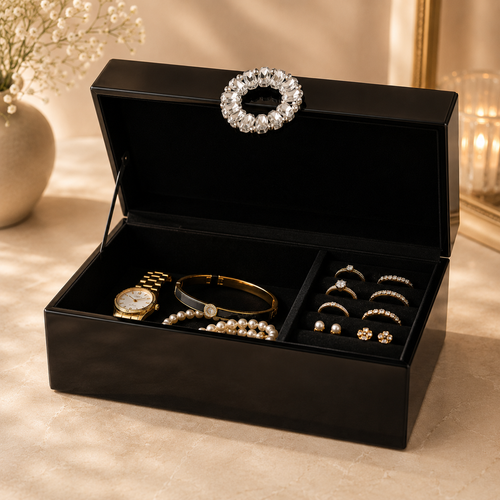
The Grid vs the Nest: Why Some Jewellery Organiser Boxes Ruin Fine Chains
If your delicate chains keep coming out kinked and your studs keep escaping, the problem is rarely you. It is the int...
-

Bathroom Organisers and the Weight Problem Nobody Warns You About
Most bathroom organisers fail for one reason: they were loaded heavier than their mount or surface could hold. A rack...
-

GTIN, GS1 and Barcodes: A Plain Guide for Home Decor Sellers
If you sell home decor online, a missing GTIN quietly weakens your listings. It will not stop most products from appe...
-
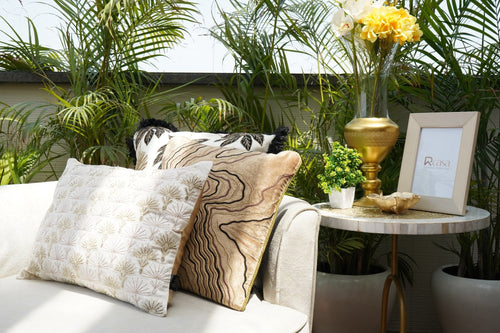
5 Ways towards a Mood-Boosting Home with RCasa
Are you having the blues? It might be due to the colors of your room. Research on color theory says the hues we choos...
