


The Crystal Jar Lid Test: Why Some Seals Keep Contents Fresh and Others Fail Quietly
The glass gets all the attention, but the lid does the real work. A crystal jar can look flawless on a shelf and still let your sweets go stale, your bath salts clump, or your cotton pads pick up bathroom damp. The seal decides that, not the sparkle. Here is how to judge a lid before you trust it with anything that matters.
Why the lid matters more than the jar body
Glass is inert. It does not let air through the walls. So when contents inside a jar go off, the air is getting in somewhere, and that somewhere is almost always the join between lid and rim. A loose or poorly matched lid creates a slow, invisible exchange of air and moisture every hour of the day. You never see it happen. You just notice, weeks later, that the contents feel different.
This is why two jars that look identical can perform completely differently. One has a lid ground to sit flush. The other has a lid that rocks a little, or rests on a rim that was never quite level.
The three lid types and what they actually seal
- Loose-fit lids. These sit on top and lift straight off. They keep dust out and look tidy, but they seal against almost nothing. Fine for items you use daily and do not need airtight, like q-tips or decorative stones.
- Ground-glass or fitted lids. The lid and rim are matched so they nest closely. Better against dust and casual moisture, though rarely truly airtight unless paired with a gasket.
- Gasketed or clamp lids. A silicone or rubber ring compresses when closed. This is the only type that comes close to airtight. Best for anything that clumps, stales, or absorbs smell.
Match the type to the job. Storing bath salts in a loose-fit jar in a steamy bathroom is a recipe for a solid brick.
The at-home lid test
You can check a seal without any tools. Close the lid and hold the jar up to a window. Look at the join. If you see even light between lid and rim in patches, air moves there too. Next, close the lid and gently try to rotate it. A well-fitted lid resists a little and sits without rocking. A poor one spins freely and wobbles.
For gasketed jars, do the tissue test. Close a thin strip of tissue in the seal so part hangs out, then close fully. Tug the tissue. If it slides out with almost no resistance, the gasket is not compressing enough to seal. If it grips, you have a working seal.
How RCasa jars handle the seal
Our jars use the lid types described above, so you can match them to the job. The Large Glass Jar with Crystal Airtight Lid holds 1000 ml, has an airtight lid with a crystal handle, and is made for dry goods such as spices, coffee, cookies and snacks. The Hammered 750 ml Glass Jar pairs clear hammered glass with a wooden lid crowned by a crystal and an airtight seal, which suits a countertop or a vanity shelf for bath salts. The Airtight Mason Glass Jar uses a clip-top locking system for pantry staples. Whatever you choose, the at-home tests above are worth running when a new jar arrives.
Match the jar to what goes inside
Dry decor, like pebbles, potpourri, or cotton balls, forgives a loose lid. Anything hygroscopic, meaning it draws water from the air, needs a real seal. That list is longer than people expect: sugar, salt, dried herbs, bath salts, loose tea, and many candies. Fragranced items also need a seal, both to keep their scent in and to stop them borrowing the smell of everything else nearby.
One rule saves most disappointment. If you would be annoyed to find the contents changed in a month, buy the gasketed lid.
Care that keeps the seal working
Seals fail from neglect as often as from design. Wipe the rim before closing so crumbs or salt grains do not sit under the lid and prop it open. Dry a gasket fully before storing, because trapped water breeds the very smell you were trying to avoid. Remove and rinse silicone rings now and then, since oils and residue harden them over time and reduce their squeeze. A gasket that has gone stiff and shiny is a gasket that has stopped sealing.
Browse all glass storage jars to compare sizes and lid styles side by side.
Frequently asked questions
Is a heavier crystal jar always better? Not always, but weight in the lid helps it hold down against the rim, and thicker glass resists chips at the edge where seals live. For storage jars, some heft is a genuine advantage.
Can I make a loose lid seal better? A little. A thin food-safe silicone ring or a strip of cling film under the lid improves a loose fit in a pinch. It is a workaround, not a fix, so choose a gasketed jar if you need reliable freshness.
Why does my crystal jar fog on the inside? Trapped moisture. Either the contents were slightly damp when stored, or humid air got sealed in. Empty it, dry everything fully, and refill in a dry room. If fog returns fast, the seal is letting damp air cycle in.
Are ground-glass lids airtight? Rarely fully airtight on their own. They resist dust and casual moisture well, but for true airtight storage you want a gasket or clamp mechanism.
Related Posts
-

The Quiet Rule for Layering Throw Blankets So a Room Looks Intentional
A throw blanket looks intentional when its size, texture, and fold contrast with what it sits on. Match everything an...
-
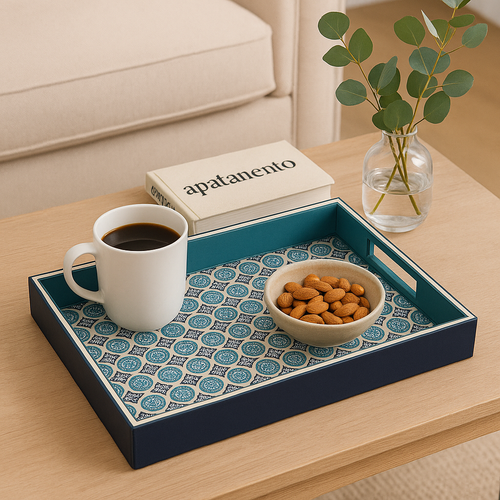
How to Style a Coffee Table for an Indian Living Room
A coffee table that is empty looks unfinished. A coffee table that is crowded looks cluttered. Somewhere between thos...
-

The Allure of Glass Trays: Elevating Every Corner of Your Home
When it comes to home decor, it's often the small touches that truly make a space your own. At RCasa, we believe in t...
-

3 Gifting Ideas When You Have No Clue
Finding the perfect gift can often feel like navigating a maze blindfolded. Whether it's a friend's wedding, a housew...
